Concrete Restoration
Stucco Cracks, Cosmetic vs. Structural: A South Florida Condo Board's Diagnostic Guide
How to tell a harmless hairline stucco crack from one that signals foundation movement or concrete spalling on a coastal Florida condo: crack types, width thresholds, the rebar-corrosion red flag, and how to repair each correctly.
Beachfront Commercial Services ·
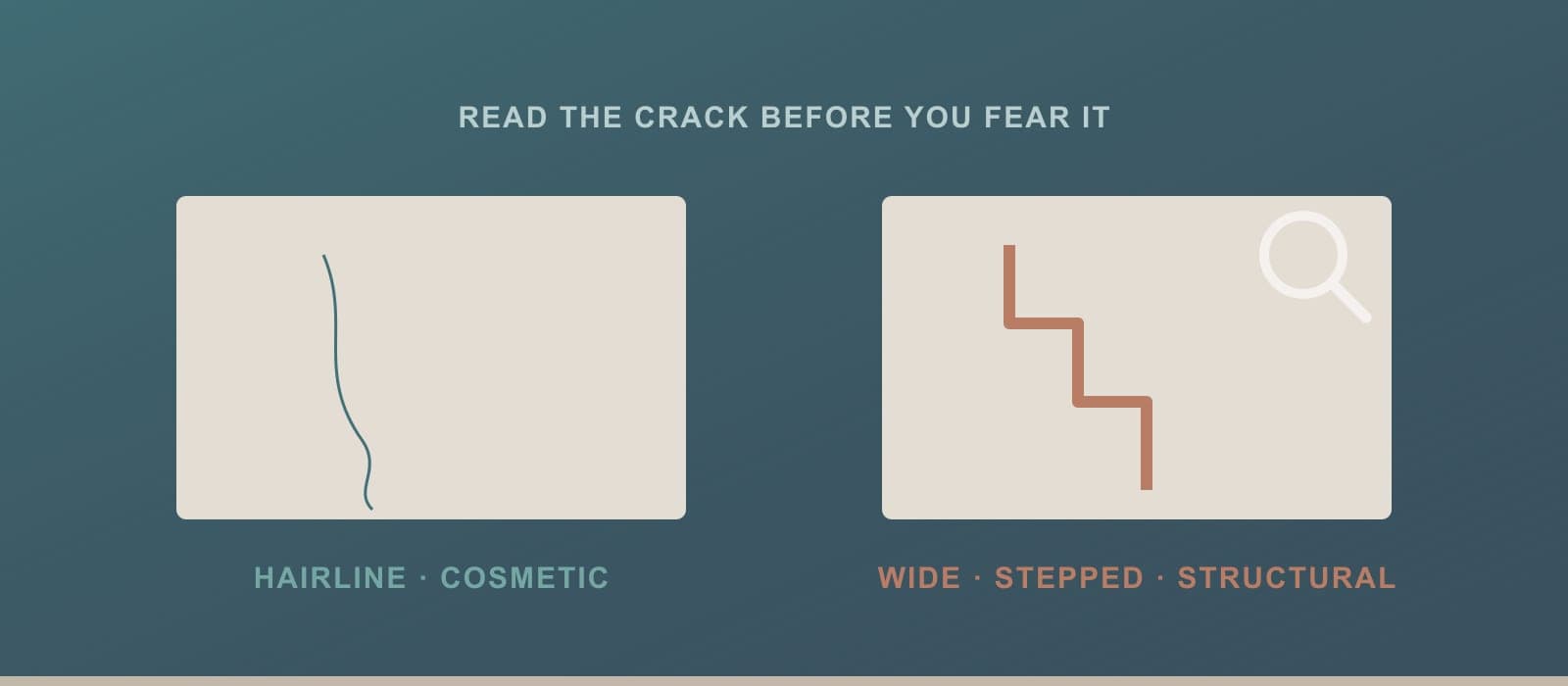
Short answer: Most thin hairline cracks in stucco, those roughly 1/16 inch wide or less, are cosmetic shrinkage or thermal cracks that need monitoring and sealing, not alarm. But cracks wider than about 1/8 inch, diagonal cracks radiating from window and door corners, stair-step cracks that follow the mortar joints of a concrete-block wall, or any crack showing rust staining, water intrusion, or a hollow "drummy" sound can signal structural movement or chloride-driven concrete spalling, and on a coastal South Florida condo those deserve evaluation by a licensed restoration contractor or structural engineer before anyone reaches for a bucket of paint.
For a condo or HOA board in Palm Beach, Broward, or Miami-Dade, that distinction is not academic. The same wall finish covers two very different things: a cosmetic blemish your maintenance crew can patch, and the first visible symptom of corroding reinforcing steel that the milestone inspection and your Structural Integrity Reserve Study (SIRS) are specifically designed to catch. Reading the crack wrong in either direction wastes money, either by over-reacting to harmless crazing, or by painting over a problem that keeps eating the building underneath.
This guide gives boards, CAMs, and building owners a practical, field-tested way to tell the two apart, why South Florida's salt air changes the calculus, and how each crack class should actually be repaired.
Note: This is general educational information, not engineering advice. Any crack that may involve structural members, reinforcing steel, or load-bearing elements should be assessed on-site by a licensed engineer or qualified restoration contractor.
Why stucco cracks at all (and why faster on the coast)
Stucco is a rigid cement-based coating applied over either a wood/metal-lath frame or, far more commonly in South Florida, a concrete-block (CMU) or poured-concrete structure. Rigid materials crack when something moves, shrinks, or pushes against them. The usual culprits:
- Shrinkage during curing. Fresh stucco loses water as it cures; the surface shrinks slightly and fine cracks appear. This is the most common, and most benign, cause.
- Thermal cycling. South Florida walls bake to high surface temperatures by afternoon and cool sharply after a storm or overnight. That daily expansion-and-contraction fatigues the finish, especially on sun-facing elevations.
- Moisture movement. High humidity and wind-driven rain push moisture into and out of the wall. Trapped moisture weakens the bond between stucco and substrate.
- Building movement and settlement. Minor settlement, slab movement, or shifting on Florida's sandy, high-water-table soils transfers stress to the rigid finish, typically at the weakest points, which are the corners of windows and doors.
- The coastal accelerant: chlorides. This is the one that turns a "stucco question" into a "concrete question." Salt-laden air and humidity drive chloride ions through the finish and into the concrete or block behind it. When chlorides reach embedded steel (rebar in beams and columns, or reinforcement in balcony edges and slabs), they break down the thin passivating layer that protects the steel. The steel corrodes, and rust occupies several times the volume of the original metal. That expansion cracks the concrete from the inside out. The crack you see in the stucco may be the messenger; the corroding steel is the message.
That last mechanism is why a generic, out-of-state "stucco cracks explained" article can mislead a coastal board. In Houston or Phoenix, a diagonal crack is usually about settlement. In Singer Island, Hollywood, or Sunny Isles, the same crack, especially with a rust tint, may be early concrete spalling, the exact deterioration our coastal concrete spalling guide covers in depth.
The seven stucco crack types, and how to read each one
Crack shape and pattern tell you more than width alone. Use this table as a first-pass triage, then confirm anything in the "evaluate" column on-site.
| Crack type | What it looks like | Typical cause | Cosmetic or structural? | First action |
|---|---|---|---|---|
| Hairline / shrinkage | Very fine, ≤1/16", random, often early in a building's life | Curing shrinkage, minor thermal movement | Usually cosmetic | Monitor; seal during next repaint cycle |
| Map cracking / crazing | Fine spiderweb network over an area | Poor mix, rapid drying, over-troweling | Usually cosmetic (aesthetic) | Clean, seal, recoat |
| Diagonal (at openings) | 45° crack running off a window or door corner | Stress concentration; possible settlement/movement if wide or growing | Could be structural | Evaluate if >1/16" or widening |
| Stair-step (over CMU) | Diagonal crack that jogs along block mortar joints | Foundation/wall movement in concrete-block construction | Often structural | Evaluate; classic movement signal |
| Horizontal | Long horizontal line, sometimes at floor lines or beams | Movement, or a crack tracing a structural member | Often structural / concrete | Evaluate, especially with rust staining |
| Vertical (long, straight) | Tall straight crack, can run through courses | Settlement or differential movement when wide | Could be structural | Evaluate if wide, offset, or growing |
| Pattern over rebar / beam edge | Crack tracing the line of a beam, column, balcony edge, or grid of reinforcement; often rust-stained | Corroding reinforcing steel expanding the concrete (spalling) | Structural / concrete distress | Stop. Get a restoration assessment |
A useful rule of thumb for boards: a single fine crack is rarely the emergency; a pattern is. Random hairlines scattered across a wall read very differently from a crack that traces the geometry of the structure underneath it.
The width test: simple action thresholds
When you can't classify by pattern alone, width gives a defensible, repeatable trigger. Train your maintenance staff and CAM to record crack width with a crack-comparator card or feeler gauge:
- ≤ 1/16 inch (about the thickness of a credit card edge): Monitor. Photograph, date, and note location. Seal as part of routine repaint prep. Most are cosmetic.
- 1/16 to 1/8 inch: Repair and seal proactively. These let water in over time. Route and seal with a flexible, stucco-compatible material before the next coating cycle.
- Greater than 1/8 inch, OR any crack that is widening, offset (edges no longer line up), diagonal/stair-step, or rust-stained: Evaluate. Bring in a licensed contractor or engineer before patching, because patching the symptom without diagnosing the cause is wasted money.
Two non-width red flags override everything above. If a crack is letting water reach the interior (staining, efflorescence, mildew, or musty smell on the inside face) or if doors and windows are sticking in the affected area, treat it as potentially structural regardless of how thin it looks.
When a "stucco crack" is really a concrete problem
This is the section out-of-state guides leave out, and it is the one that matters most to a coastal condo board. Watch for these tells that the finish is reporting distress in the structure behind it:
- Rust-colored staining bleeding from or near the crack. Stucco and paint do not rust. A rust tint means steel is corroding behind the surface.
- A crack that traces a structural line, straight along a beam soffit, down a column, or around the perimeter of a balcony or walkway slab edge, rather than wandering randomly.
- A hollow or "drummy" sound when the area is tapped, indicating the stucco (and possibly the concrete cover) has delaminated from the substrate.
- Bulging, flaking, or pieces falling away, exposing gray concrete or, worst case, rusted steel.
Any of these point toward spalling: chloride-driven corrosion lifting the concrete cover. Spalling does not get better with paint. It is repaired by removing concrete back to sound material, cleaning and treating the steel, rebuilding with repair mortar, and then protecting the assembly: the disciplined "repair then protect" sequence we use on balconies in our balcony and deck waterproofing guide and at scale in our parking-garage restoration guide. Beachfront self-performs both the structural concrete repair and the waterproofing that follows, so the diagnosis, the repair, and the protective system come from one accountable, licensed contractor rather than three subcontractors pointing at each other.
The elastomeric trap: why "just paint over it" backfires
Boards are often told that a high-build elastomeric coating will "take care of the cracks." Here is the precise, important truth: elastomeric coatings bridge small future cracks that form after the coating is applied. They do not repair an existing, active, or structural crack. Stretch a thick rubbery film over a crack that is still moving, and within roughly 12 to 18 months the crack telegraphs right back through the finish. You have spent the money and hidden the evidence without fixing the cause.
Correct sequencing depends on the crack class:
- Hairline / cosmetic (≤1/16"): Clean, then bridge with an elastomeric patching compound or high-build elastomeric primer. These genuinely stay closed.
- Moving / moderate (1/16"–1/4"): Cut the crack out in a small "V" groove, fill with a flexible, stucco-compatible sealant or patch, texture to match, then prime with a stucco-formulated primer before topcoat. A simple caulk-and-paint smear over these rarely lasts.
- Spall-related / structural: Full concrete repair first (remove unsound concrete, clean and passivate the steel, rebuild with repair mortar), then coat and waterproof. No coating substitutes for this step.
Across all three, surface preparation determines lifespan. Proper cleaning (typically a controlled soft wash rather than high-pressure blasting, which can drive water behind the stucco and worsen the very problem you're chasing) and meter-verified dry substrate are why a correctly prepped repair holds and a rushed one fails. This is the same prep discipline behind our coastal repaint cadence.
What this means for boards, CAMs, and milestone/SIRS readiness
On any condominium building of three or more habitable stories, Florida's milestone inspection law (§553.899) and the Structural Integrity Reserve Study requirement (§718.112(2)(g)) put exterior and structural condition squarely on the board's agenda. Stucco cracking is one of the most visible, lowest-cost early-warning systems you have, if someone is actually reading it.
Practical steps for a board or property manager:
- Map and date your cracks. A simple annual photo log with locations and widths turns "the building looks cracked" into trackable data, and gives your milestone engineer a head start.
- Triage with the table and width bands above. Route obvious cosmetic crazing into routine repaint prep; escalate diagonal, stair-step, rust-stained, or growing cracks for assessment.
- Treat crack repair as preventive maintenance, not cosmetics. Sealing cracks on schedule protects the paint and waterproofing systems the association already funded and slows chloride entry into the structure, directly preserving SIRS-tracked components like the roof, structural elements, waterproofing, and exterior painting.
- Bundle the work. Crack mapping pairs naturally with a scheduled repaint, balcony recoat, or pre-milestone walk, which spreads mobilization cost and gets the envelope addressed in one engagement.
Beachfront Commercial Services is a licensed and insured South Florida contractor (DBPR CGC #1537131, CCC #1333921, CCC #1333373) that self-performs concrete restoration, waterproofing, and painting with W-2 crews and certified-applicator coating systems. That means when a crack turns out to be more than a crack, the same team that diagnosed it can repair the concrete, waterproof the assembly, and recoat the wall, and document it all for your reserves and your milestone file.
Frequently Asked Questions
Are hairline cracks in my condo's stucco something to worry about?
Usually not on their own. Hairline cracks roughly 1/16 inch wide or less are most often cosmetic shrinkage or thermal cracks. The right response is to photograph and date them, monitor for change, and seal them during the next repaint cycle. They become a concern only if they widen, multiply into a pattern that traces the structure, show rust staining, or start letting water reach the interior.
What do diagonal or stair-step stucco cracks mean?
Diagonal cracks running off the corners of windows and doors, and stair-step cracks that jog along the mortar joints of a concrete-block wall, are classic signals of building movement or settlement. On South Florida's predominantly concrete-block construction, a stair-step pattern in particular warrants professional evaluation, especially if the crack is wider than about 1/8 inch, is growing, or has offset edges.
Can I just paint over stucco cracks with elastomeric coating?
Only the smallest cosmetic ones. Elastomeric coatings bridge fine cracks that form after the coating is applied; they do not repair an existing active or structural crack. Paint a thick film over a moving crack and it typically reappears within 12 to 18 months. Moving cracks need to be V-routed and sealed with a flexible patch first, and spall-related cracks need full concrete repair before any coating.
How do I know if a stucco crack is actually concrete spalling?
Look for rust-colored staining at or near the crack, a crack that traces a beam, column, or balcony edge rather than wandering randomly, a hollow or "drummy" sound when tapped, or pieces flaking away to expose gray concrete or rusted steel. Any of these suggest chloride-driven corrosion of the reinforcing steel (spalling), which requires concrete restoration, not paint. Have it assessed by a licensed restoration contractor or engineer.
Who should inspect cracks on a condo building before our milestone inspection?
For routine triage, your maintenance staff or CAM can log and measure cracks using the width bands in this guide. For anything diagonal, stair-step, rust-stained, widening, or admitting water, bring in a licensed contractor experienced in coastal concrete restoration and, where structural members are involved, a structural engineer. Documenting condition ahead of the milestone inspection gives your engineer better data and can reduce surprises in the SIRS.
Ready to Protect Your Property?
Tell us about your building and a Beachfront estimator will follow up with a clear scope and fair pricing.