Roofing
Commercial Roof Preventive Maintenance Programs for Florida Condos: Cadence, Leak Logs, and How a Roof Plan Pays for Itself
A Florida condo board, HOA, and property manager's guide to setting up a real commercial roof preventive-maintenance (PM) program: the twice-a-year-plus-after-every-storm inspection cadence, what a PM visit actually covers, the roof file and leak log that preserve your warranty, the ROI math (NRCA: a maintained roof lasts ~21 years vs. ~13 neglected), and how documented maintenance extends RUL, lowers your SIRS roof-reserve contribution, and keeps you ready for insurance roof-age scrutiny.
Beachfront Commercial Services ·
Short answer: A commercial roof preventive-maintenance (PM) program means inspecting your roof at least twice a year (spring and fall) plus after every major storm, clearing drains and making small repairs on a set schedule, and documenting all of it in a roof file. It matters because the numbers are not close: the National Roofing Contractors Association (NRCA) reports that a maintained commercial roof lasts roughly 21 years versus about 13 years for a neglected one, and a federal life-cycle study found proactive care runs about $0.14 per square foot per year against $0.25 for a reactive, wait-for-the-leak approach. On the Florida coast, with salt air, relentless UV, and a June-1-to-November-30 hurricane season, a documented roof program is the difference between a planned reserve expense and a surprise special assessment.
This guide is written for condo and HOA boards, community association managers (CAMs), commercial building owners, and facility managers across Florida. It explains the cadence, what a PM visit actually includes, the roof file and leak log that keep your warranty alive, and how documented maintenance flows straight into your remaining-useful-life (RUL) numbers, your SIRS roof reserve, and your insurance file. (This is general information for planning, not engineering, structural, or code-interpretation advice. See the note at the end.)
What "roof asset management" actually means
Most buildings do not have a roof program. They have a roof reflex: a unit owner reports a ceiling stain, somebody calls a roofer, the roofer finds the leak, patches it, and leaves. That is reactive roofing, and it is the single most expensive way to own a roof.
Roof asset management flips the model. Instead of treating the roof as a thing you fix when it fails, you treat it as a funded capital asset with a maintenance schedule, a service life, and a paper trail, the same way you'd treat an elevator or a chiller. A real program has four moving parts:
- A baseline survey. Someone qualified walks the whole roof once, documents its type, age, condition, drains, penetrations, and existing damage, and establishes a starting point.
- A recurring inspection cadence. Scheduled visits, not emergency calls, catch small defects while they are still small.
- Routine maintenance tasks. Drain clearing, debris removal, sealant renewal, and minor repairs done on a schedule, not after a failure.
- Documentation. A roof file and leak log that record every visit, finding, photo, and repair.
Everything below is how those four parts work on a coastal Florida building.
Why reactive roofing quietly drains your reserve
Boards often resist a maintenance contract because it looks like a new recurring cost. The math says the opposite: the recurring cost is the savings.
- Preventive maintenance extends roof life by roughly 30% to 100%. Studies summarized from the NRCA and the Association for Facilities Engineering (AFE) put the life-extension range that wide because a neglected membrane fails at its weakest seam years before the material itself is worn out.
- A maintained roof lasts about 21 years; a neglected one about 13. That NRCA figure means neglect can cost you roughly eight years of roof, often a six-figure replacement, pulled forward before it was due.
- Life-cycle cost: about $0.14 versus $0.25 per square foot per year. A U.S. Office of Inspector General review of a large federal roofing portfolio found a proactive program averaged that lower number, while a reactive, repair-on-failure approach cost nearly double over the roof's life.
- Reactive repairs run three to five times planned maintenance, and the NRCA notes proactive maintenance can cut repair costs by up to about 50%.
Put those together on a 30,000-square-foot condo roof and the difference between proactive and reactive is measured in tens of thousands of dollars per decade. That is before you count the water damage to the units below, the mold remediation, and the emergency-call premiums that always land during hurricane season when every roofer in the county is booked.
The deeper cost is timing. A leak discovered reactively is a leak that has already soaked the insulation. Wet insulation under a membrane does not dry out; it stays saturated, loses its R-value, corrodes fasteners, and spreads. By the time a reactive leak is visible on a ceiling, the repair is frequently no longer a repair. It is a section replacement.
The coastal Florida cadence: twice a year, plus after every storm
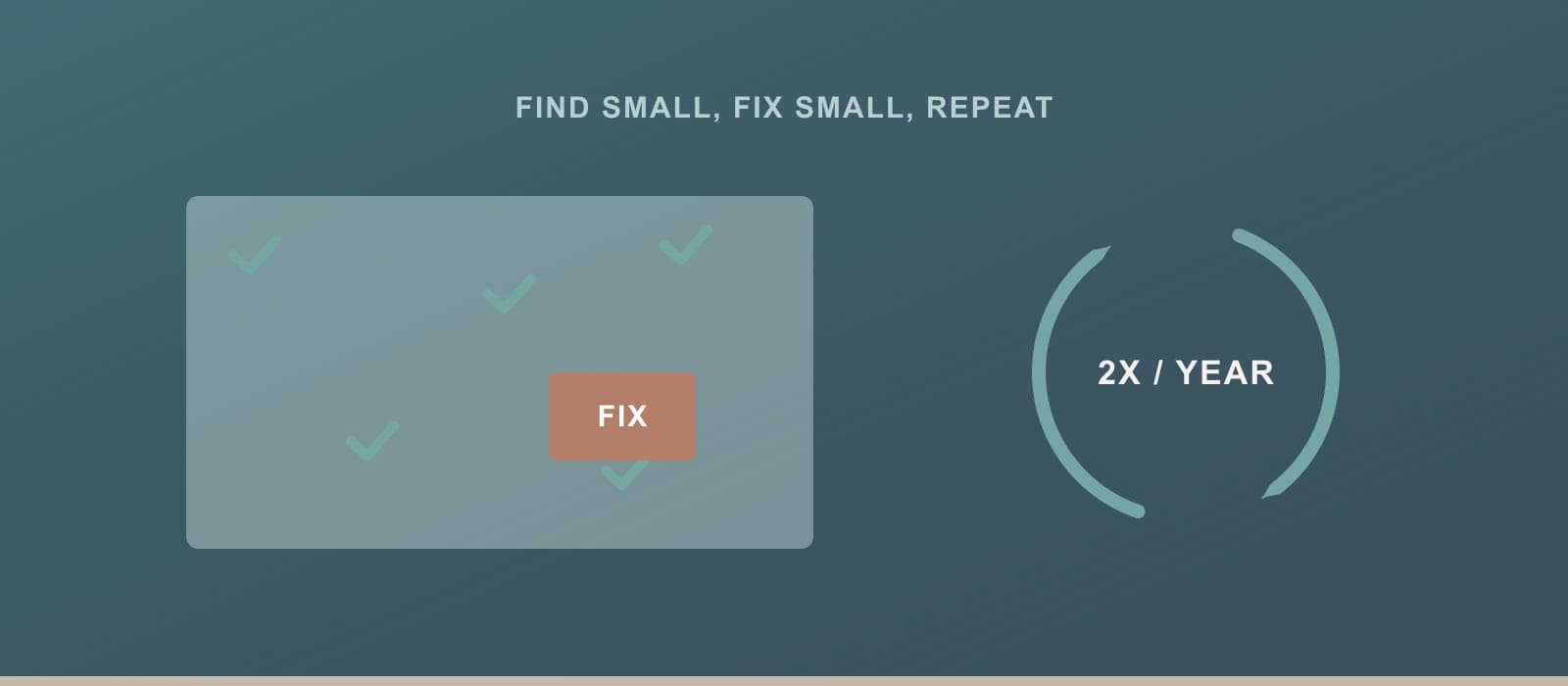
The NRCA's baseline recommendation for a low-slope commercial roof is at least two professional inspections per year, typically spring and fall. For a coastal Florida building, that baseline is the floor, not the ceiling, and the storm inspection is non-negotiable.
Spring inspection (before hurricane season). Scheduled ahead of June 1, this visit is about readiness: clear every drain and scupper, confirm positive drainage, check that flashings and penetrations are sealed, and repair anything that could turn into an entry point when the wind-driven rain arrives. A blocked drain in April is a maintenance line item; the same blocked drain during a July downpour is a ponding event and a possible interior flood.
Fall inspection (after hurricane season). After November 30, this visit assesses what the season did: lifted flashing, displaced ballast or tile, punctures from flying debris, seam stress from months of thermal cycling, and any ponding that has appeared. It sets up the winter dry-season window (roughly November through April) when membrane repairs and recoats cure properly.
Post-storm inspection (after any named storm or major weather event). This is the one generic national guides underweight and coastal buildings cannot skip. After a hurricane, tropical storm, or severe thunderstorm, the roof should be inspected promptly, and the smart inspection starts inside the building, checking ceilings and top-floor walls for fresh stains before going up top. Prompt post-storm documentation also matters for insurance: a dated inspection report separates storm damage from pre-existing wear, which is exactly the distinction a carrier will scrutinize on a claim.
Some buildings need more than this three-visit rhythm. Roofs with heavy rooftop equipment, frequent trade foot traffic (HVAC, solar, satellite, elevator crews), or membranes already past 15 years benefit from quarterly visits, because every one of those factors adds punctures and wear between scheduled looks.
What a preventive-maintenance visit actually covers
"Inspection" undersells it. A real PM visit is inspection plus the small corrective work that keeps a finding from becoming a failure. A thorough coastal Florida PM visit covers:
- Drains, scuppers, and downspouts: cleared of debris, tested for flow, checked for the ponding that follows a slow drain. Clogged drainage is the number-one preventable cause of coastal flat-roof failure.
- The membrane field: checked for blisters, splits, shrinkage, punctures, open laps, and UV-driven surface breakdown.
- Seams and terminations: the perimeter, base flashings, and the roof-to-wall transitions where leaks almost always begin, not the open field.
- Penetrations and pitch pans: pipe boots, HVAC curbs, vents, and pitch pans that dry out and pull away in the heat.
- Sealants and metal edge: fascia, coping, counterflashing, and expansion-joint covers; sealants are renewed before they fail, not after.
- Standing water: any ponding still present 48 hours after rain is flagged and traced to its cause (slope, drain, or deflection) rather than simply coated over.
- Moisture check: visual and, where warranted, an infrared or moisture-meter scan to find saturated insulation the surface hides.
- Minor membrane repair: small punctures, open seams, and failed details fixed on the spot, before the next storm turns them into an interior leak.
The point of doing the small repairs during the inspection is that the cheapest possible moment to fix a two-inch open seam is the moment you find it, standing next to it, with the materials on the truck.
The roof file and leak log: the paperwork that pays you back
Documentation feels like the boring part of a roof program. It is actually the part that protects the most money, for three separate reasons.
It preserves your warranty. Most manufacturer and no-dollar-limit (NDL) roof warranties are conditional on documented maintenance and reasonable care. When a claim is filed, the manufacturer asks for the maintenance record. A building that can produce a dated inspection-and-repair history has a defensible warranty; a building that cannot is often told the failure resulted from neglect, and the warranty walks.
It builds your RUL case. Remaining useful life is not guessed from a chart; it is estimated from condition. A roof file showing consistent maintenance, cleared drains, and repaired details supports a longer documented RUL than an identical roof with no records. As covered below, a longer RUL directly lowers what your reserve study says you must set aside each year.
It settles insurance and who-pays disputes. A dated post-storm report distinguishes storm damage from wear. A leak log that traces a recurring leak to a specific detail supports the repair scope and, in a condo, helps sort association responsibility from unit-owner responsibility when water reaches the unit below.
A working roof file includes: the baseline survey; every inspection report with dates, findings, and photos; a running leak log (date reported, location, suspected source, action taken, result); all repair invoices and warranty documents; and the manufacturer's maintenance requirements. Keep it where the next board and the next CAM can find it. Roof knowledge that lives only in one manager's memory disappears the day they leave.
Funding it: how PM flows into RUL, SIRS, and your reserve
For a Florida condominium, the roof is not just an asset. It is a statutorily reserved component. Under the Structural Integrity Reserve Study requirement (§718.112(2)(g)), the roof is one of the items an association must study and fund, and post-SB 4-D/HB 913 those structural reserves generally can no longer be waived away.
Here is the connection boards miss: the annual reserve contribution is driven by remaining useful life, and RUL is driven by maintenance. A reserve study takes the replacement cost, divides by the years of life left, and that's roughly your yearly set-aside. Extend the roof's documented RUL through maintenance and you spread the same replacement cost over more years, which lowers the annual number. Neglect the roof, watch its RUL collapse, and the reserve study will demand a much larger contribution or, worse, the board will face a special assessment when the roof fails early.
A few practical funding points:
- Operating vs. reserve. Routine PM (inspections, drain clearing, minor repairs) is typically funded from the operating budget as recurring maintenance. The eventual replacement is the reserve line. Keeping them separate is what prevents a reserve fund from being nibbled away by repairs it was never meant to cover.
- Coordinate with the milestone timeline. Buildings subject to the milestone inspection (§553.899) should sequence roof condition data into that structural picture; a documented roof program feeds cleaner information into both the milestone and the SIRS.
- Keep the insurance file current. Florida's roof-age underwriting environment is unforgiving. A maintenance record and a current RUL inspection are exactly what a carrier (or Citizens, under its commercial roof rules for condo master policies) wants to see when roof age is questioned (see our post on roof coatings, insurance, and wind mitigation).
A board and CAM playbook for standing up a roof program
If your building runs reactively today, here is the sequence to get to a real program:
- Commission a baseline roof survey. Get one qualified, licensed contractor to document type, age, condition, drainage, and existing damage. This is your starting line and your first RUL data point.
- Set the cadence in writing. Spring, fall, and post-storm at minimum; quarterly if the roof is old or equipment-heavy. Put it in a maintenance agreement so it happens whether or not anyone remembers.
- Assign who owns what. The CAM or on-site staff handle the daily basics: keeping drains clear between visits, restricting roof access to authorized personnel, reporting leaks immediately. The roofing contractor handles the scheduled inspections and repairs. Write it down so nothing falls between them.
- Start the roof file today. Even before the program is formal, open the file and begin the leak log. Documentation only helps if it starts before the claim.
- Fund PM from operating; protect the reserve. Budget the recurring program as an operating expense and let the reserve study, informed by your improving RUL, carry the eventual replacement.
- Restrict and limit rooftop work. Every unauthorized penetration and every trade walking the membrane is future damage. Control roof access and require that any new penetration be flashed by the roofer, not improvised by the equipment installer.
Where Beachfront fits
Beachfront Commercial Services is a licensed, insured Florida contractor (CGC #1537131, CCC #1333921, CCC #1333373) that self-performs roofing, waterproofing, and concrete restoration with W-2 crews. Coastal properties are our specialty. For roof asset management, that combination matters in a specific way: coastal roofs leak at the details (flashings, penetrations, and roof-to-wall transitions), and the same crew that inspects your roof can detail and waterproof those transitions in one mobilization, rather than handing you off to a separate trade. We build the roof file, run the cadence, and document maintenance in the language your reserve professional, your milestone engineer, and your carrier are already using. We are the contractor that executes and documents the program, not your reserve-study firm or your engineer of record, and we keep those roles clearly separate.
If your building is still calling a roofer only when a ceiling turns brown, a documented preventive-maintenance program is almost certainly the cheapest roofing decision your board will make this year.
Frequently Asked Questions
How often should a commercial or condo roof be inspected in Florida? At least twice a year, typically spring and fall, plus a prompt inspection after any hurricane, tropical storm, or severe weather event. That follows the NRCA baseline of two professional inspections per year, with the post-storm inspection added because of the June-1-to-November-30 hurricane season. Older roofs (past 15 years) or roofs with heavy rooftop equipment often warrant quarterly visits.
Does a preventive-maintenance program really save money, or is it just another contract? It saves money. The NRCA reports a maintained commercial roof lasts roughly 21 years versus about 13 neglected, preventive care extends roof life by an estimated 30% to 100%, and a federal life-cycle study found proactive maintenance costs about $0.14 per square foot per year against $0.25 for a reactive approach. Reactive and emergency repairs typically run three to five times the cost of planned maintenance.
Will skipping maintenance void my roof warranty? Very possibly. Most manufacturer and no-dollar-limit (NDL) warranties require documented maintenance and reasonable care. If you file a claim and cannot produce a maintenance record, the manufacturer may deny it as neglect. A dated inspection-and-repair file is what keeps the warranty enforceable.
What is a roof leak log and why does my association need one? It is a running record of every reported leak (the date, location, suspected source, action taken, and result), kept alongside your inspection reports and repair invoices in a single roof file. It preserves your warranty, supports a longer documented remaining useful life (which lowers your reserve contribution), and helps distinguish storm damage from wear and association responsibility from unit-owner responsibility.
How does roof maintenance affect my condo's reserves under SIRS? The roof is a reserved component under the Structural Integrity Reserve Study requirement (§718.112(2)(g)), and your annual contribution is driven by the roof's remaining useful life. Documented maintenance extends RUL, which spreads the replacement cost over more years and lowers the yearly set-aside. Neglect shortens RUL and can trigger a special assessment when the roof fails early.
This article is general information for planning purposes and is not engineering, structural, insurance, or legal advice. Roof condition, code applicability, warranty terms, and reserve requirements vary by building; the applicable standards, your manufacturer's warranty, your reserve professional, and (for code and structural questions) a licensed engineer and the authority having jurisdiction govern the specifics for your property. Beachfront Commercial Services performs and documents roofing, waterproofing, and restoration work; it does not issue reserve studies or milestone certifications.
Ready to Protect Your Property?
Tell us about your building and a Beachfront estimator will follow up with a clear scope and fair pricing.